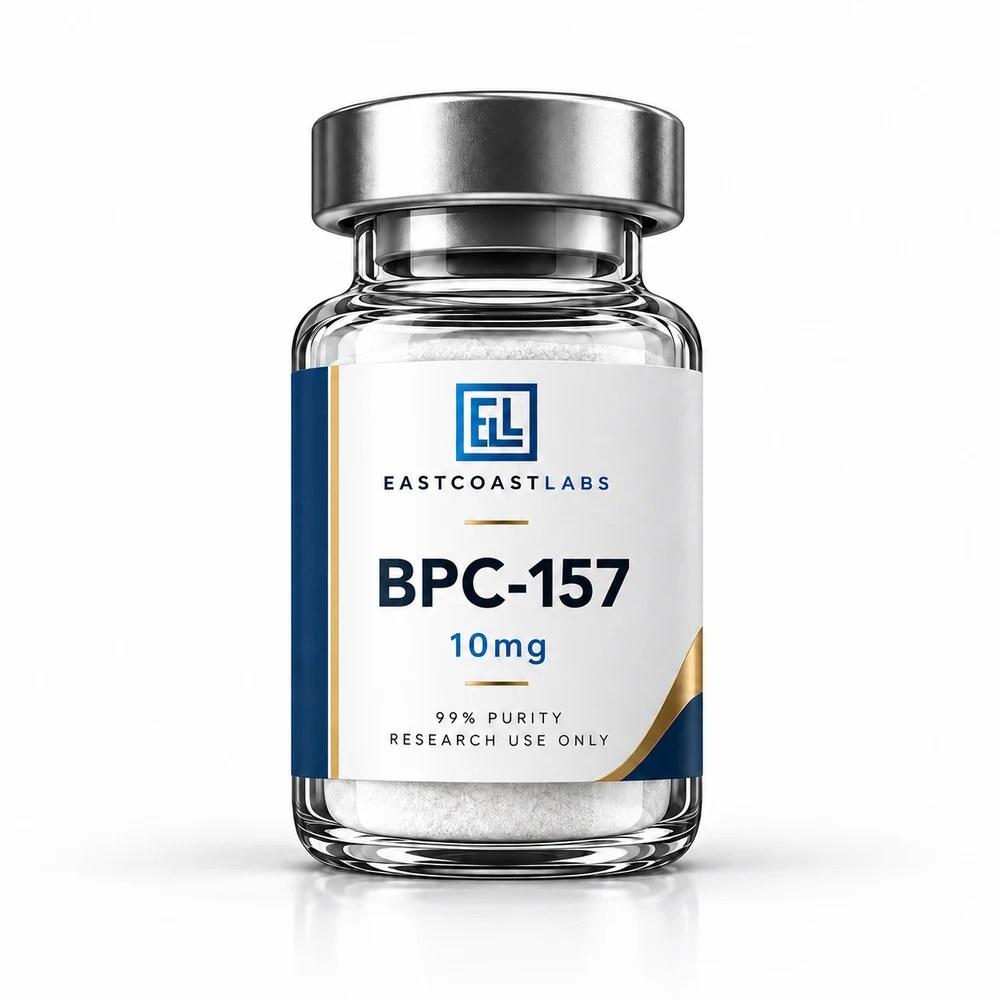
At a glance
A synthetic 15-amino-acid peptide studied in tendon explants and cultured rat tendon fibroblasts.
Limits of the evidence. These endpoints do not establish clinical effects. The cited experiments did not evaluate BPC-157/TB-500 combinations or material supplied by ECL.
Identity and specifications
BPC-157 is a synthetic pentadecapeptide. A compound name and nominal vial mass are separate from a verified sequence, counterion, water content and measured amount.
What the selected studies examined
Chang and colleagues examined rat tendon explants and fibroblasts, including migration, survival and signalling measurements. Their 2011 assay did not show a direct proliferation change under the tested conditions. The 2014 study examined growth-hormone receptor expression and responses involving growth-hormone stimulation.
Limitations and open questions
These endpoints do not establish clinical effects. The cited experiments did not evaluate BPC-157/TB-500 combinations or material supplied by ECL.
These publications describe the materials and experimental conditions used by their authors. They do not establish the identity, composition, stability, safety or performance of East Coast Labs material. A reference list is a selected starting point, not a systematic review.
Interpreting a supplied material
Check the exact product and selected size, then read its documentation status. A laboratory report describes the named sample at the stated date; it does not establish a match to current stock. Read Testing & quality for the distinction between document authenticity and a documented lot relationship.
Handling, solvent compatibility and stability require material-specific information and a validated laboratory protocol. Published biological findings do not establish storage conditions or suitability for a particular experiment.